Italy is home to an extraordinary natural heritage, made up of lagoons, forests, wetlands, caves, mountains and protected areas. For those who enjoy travelling by motorhome, campervan or autonomous caravan, these destinations offer a unique opportunity to observe wildlife and discover places that often lie far from the busiest tourist routes.
WWF nature reserves are special places where biodiversity conservation meets authentic outdoor experiences. Here you can walk along scenic trails, watch migratory birds, visit nature centres and explore unique ecosystems.
Moreover, choosing a stop surrounded by nature can transform your journey into a more sustainable and meaningful travel experience. Thanks to Agricamper, many motorhome and caravan travellers can plan their itineraries by combining culture, landscapes and overnight stops at farms located throughout Italy.
Let’s explore some of Italy’s most fascinating WWF reserves, arranged from north to south, perfect additions to your next road trip across Italy.
Marano Lagunare WWF Reserve
In the heart of the Friuli lagoon, near the charming fishing village of Marano Lagunare, lies one of the most important wetland areas of the Upper Adriatic.
This environment is characterised by reed beds, mudflats, small islands and shallow lagoons that provide habitat for numerous bird species. During migration periods, visitors can spot herons, cormorants, black-winged stilts and flamingos.
Among the most interesting activities is a visit to the historic centre of Marano Lagunare, an ancient fishing village with its narrow streets and picturesque arcades. You can also follow nature trails along the lagoon or join boat excursions that reach the traditional lagoon huts known as casoni.
Nearby, the historic town of Aquileia is well worth a visit, with its magnificent Cathedral and the remains of one of the most important Roman settlements in northern Italy.
Cronovilla WWF Oasis
The Cronovilla Oasis is located in the village of Vignale di Traversetolo, in the province of Parma. This valuable wetland was created through the restoration of a former quarry and has become an important refuge for wildlife.
Walking along the nature trails, you may observe herons, mallards, grebes and various amphibian species. Observation towers provide excellent opportunities for peaceful birdwatching.
The reserve is also ideal for families thanks to its educational trails and activities focused on wetland ecosystems.
Nearby attractions include the village of Traversetolo and the beautiful Castle of Torrechiara, considered one of the most impressive castles in Emilia-Romagna.
Alviano WWF Oasis
Located in the province of Terni, the Alviano WWF Oasis is one of the best-known protected areas in central Italy.
The reserve surrounds the artificial lake created along the River Tiber and serves as an important resting point for thousands of migratory birds.
Well-maintained trails lead visitors to observation hides perfectly integrated into the natural environment. Here you may spot marsh harriers, kingfishers, grey herons and many other species.
Just a few kilometres away lies the picturesque medieval village of Alviano, dominated by the imposing Alviano Castle.
The nearby city of Orvieto is also worth exploring, with its stunning Cathedral and the famous St. Patrick’s Well.
Lake Burano WWF Reserve
Continuing south, you will reach the beautiful Lake Burano Reserve near Capalbio in Tuscany.
This was the very first WWF reserve established in Italy and remains one of the country’s most significant examples of environmental conservation.
The coastal lake, separated from the sea by a sand dune system, provides habitat for numerous waterbird species. Flamingos, herons and ospreys are among the most frequently sighted birds.
Guided trails cross a variety of landscapes including lagoons, sand dunes, Mediterranean scrubland and wetlands.
After your visit, take time to explore the charming medieval village of Capalbio and the famous Tarot Garden, one of Tuscany’s most unique artistic attractions.
WWF Bussento Caves Nature Reserve
The Morigerati WWF Oasis is located within the Cilento, Vallo di Diano and Alburni National Park in southern Campania.
This protected area preserves one of southern Italy’s most fascinating ecosystems, where the Bussento River re-emerges after flowing underground for several kilometres.
The main trail crosses wooden bridges, shaded forests and crystal-clear springs. Along the route, visitors may encounter otters, amphibians and a rich variety of Mediterranean vegetation.
The village of Morigerati itself is worth exploring, with its stone alleys and beautiful views over the Cilento countryside.
Nearby destinations include Sapri, Palinuro and Marina di Camerota.
Torre Guaceto
Our next stop takes us to Puglia, along the Adriatic coast of the province of Brindisi.
Torre Guaceto is one of the Mediterranean’s most renowned protected areas and a perfect example of how environmental conservation and sustainable tourism can coexist.
The reserve includes pristine beaches, sand dunes, Mediterranean scrubland and exceptionally rich marine ecosystems.
Visitors can explore nature trails on foot or by bicycle, observe numerous bird species and visit the historic watchtower that overlooks the coastline.
Nearby attractions include the historic centre of Ostuni, known as the White City, and the charming seaside village of Torre Santa Sabina.
Trapani and Paceco Salt Pans WWF Oasis
Your journey through Italy’s WWF reserves can continue to western Sicily, where the Trapani and Paceco Salt Pans WWF Oasis protects one of the Mediterranean’s most iconic landscapes.
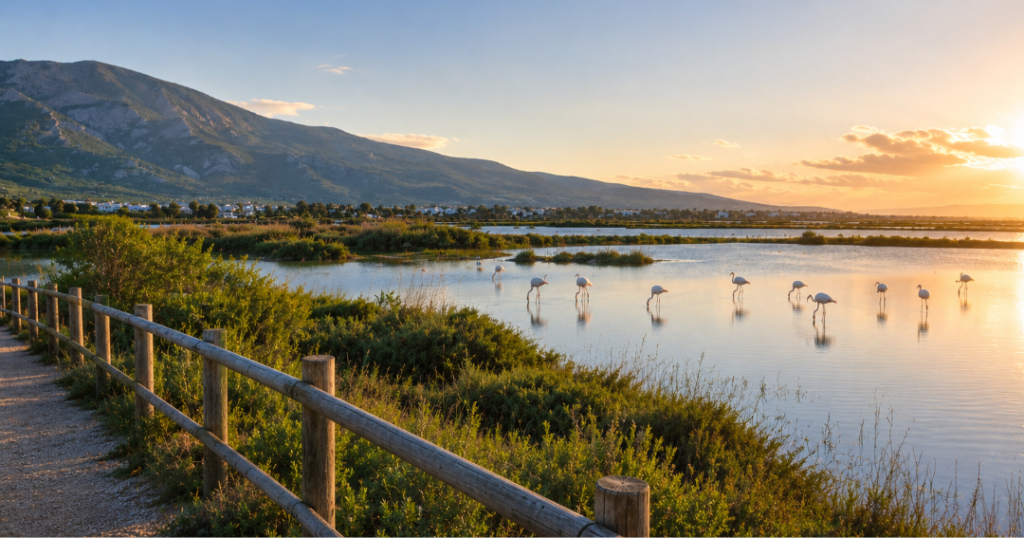
The reserve is an important stopover for many migratory bird species. During your visit, you may observe flamingos, black-winged stilts, herons and avocets, particularly along the trails that cross the salt pans.
Photography enthusiasts will find especially spectacular scenery at sunrise and sunset, when the reflections on the salt basins create stunning light effects.
Nearby attractions include the historic centre of Trapani, the medieval hilltop village of Erice, and the nearby Island of Mozia, an important Phoenician archaeological site located within the Stagnone Nature Reserve.
Conclusion
From the lagoons of Friuli Venezia Giulia to the landscapes of Sicily, passing through Tuscany, Umbria, Campania and Puglia, Italy’s WWF reserves offer extraordinary opportunities for authentic travel experiences by motorhome, campervan or autonomous caravan.
These protected areas allow visitors to enjoy hiking, birdwatching, nature photography and, above all, the chance to slow down and immerse themselves in landscapes that showcase Italy’s remarkable biodiversity.
By combining nature reserves with overnight stops at farms across the country, you can create memorable itineraries that blend culture, nature and local traditions.
Before setting off, download the Agricamper app and try the free Demo version to explore its features and see the available stopovers on the map.
Then purchase your membership and enjoy access to hundreds of free and unlimited 24-hour stopovers throughout Italy, making your next motorhome adventure even more rewarding.